Tehran warns a new US war against Iran would ‘disintegrate global order’

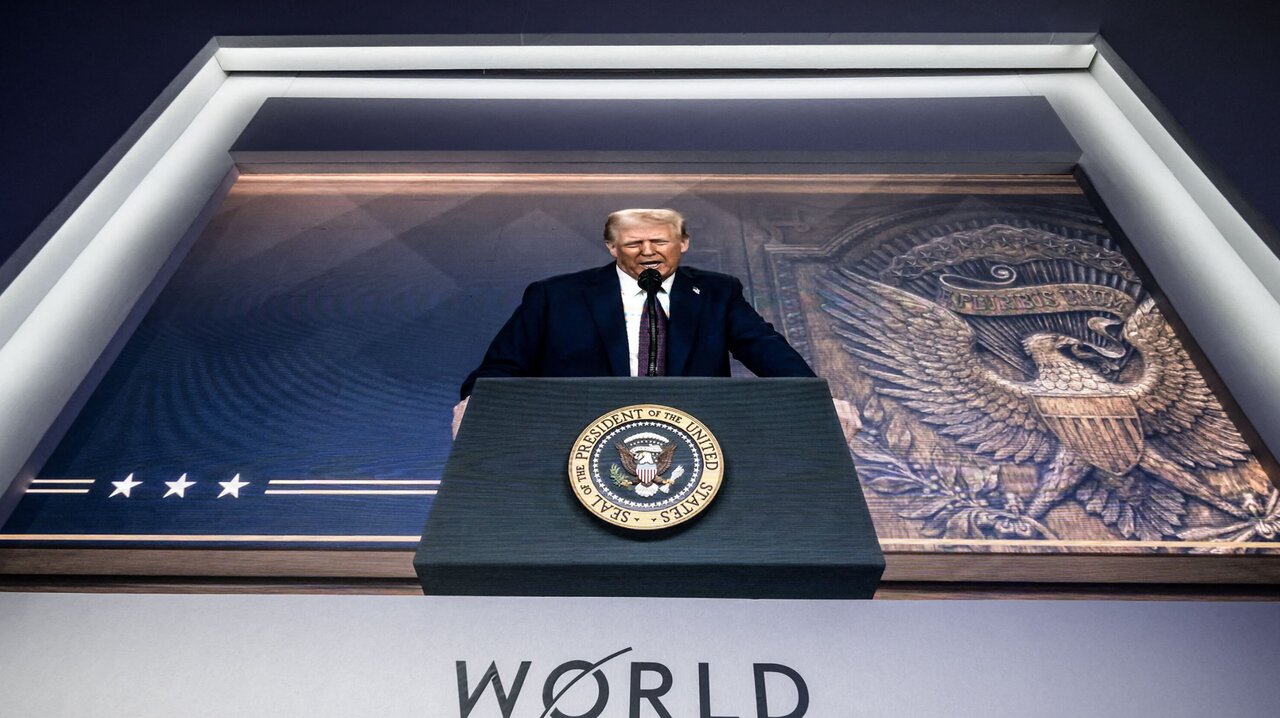
TEHRAN — Any American military confrontation with Iran would not remain confined to its borders but would trigger “an inevitable path toward the disintegration of the global order,” Al Mayadeen reported on Saturday, citing an alleged Iranian source close to decision-making circles in Tehran.
The source warned that such a conflict would alter the international balance of power and push other global players to act. Russia could shift its position regarding Europe, while Beijing might move to reshape realities in the Taiwan Strait, the source said to Al Mayadeen.
“A major conflict would create an opening for other global powers to exploit the resulting shifts,” the source added.
The alleged warning follows a formal communication from Iran’s Mission to the United Nations on Friday, which stated that recent statements by U.S. President Donald Trump “signal a real risk of military aggression” against Iran. The mission cautioned that such action would be “catastrophic for the region” and threaten international peace.
In Tehran, senior lawmakers directed more messages at Washington on Friday.
Ebrahim Azizi, head of the Parliament’s National Security Commission, posted on X: “The Americans know that Iran is not war-seeking; but it is war-ready. Any uncalculated action against Iran, on any scale, will receive a response that will make them regret it. We are not a nation that bows its head.”
Manouchehr Mottaki, another senior parliamentarian, went further during an appearance on national news. “If America makes the slightest mistake, it will get its response in less than 10 minutes,” Mottaki said. “This is not an idle threat.”
Since early February, two rounds of indirect nuclear talks have taken place between Washington and Tehran. The previous track was destroyed by U.S.-Israeli bombing in June. Analysts in the region suggest Trump may have entered negotiations to reposition military assets and prepare for potential conflict, rather than pursue a genuine deal.
They make that argument based on the fact that the U.S. has deployed massive naval power to Iran’s doorstep in recent weeks, including the USS Abraham Lincoln in the Arabian Sea and the USS Gerald R. Ford en route to the region. The two carrier groups possess over 120 aircraft, accompanied by destroyers and support vessels requiring an estimated 13,000 sailors to operate.
What Iran can do
On Tuesday, Leader of the Islamic Revolution Ayatollah Seyyed Ali Khamenei addressed the buildup directly. “An aircraft carrier is a dangerous equipment,” the Leader said. “But even more dangerous than that is the weapon capable of sending it to the bottom of the sea.”
Iran’s military doctrine relies on asymmetric capabilities developed over decades. These include hypersonic missiles, impossible for current defense systems to intercept, and anti-ship ballistic missiles like the Zolfaghar Basir, which can strike moving sea targets from 700 kilometers. The Abu Mahdi cruise missile features AI-enabled path planning and radar-evading capabilities with a range exceeding 1,000 kilometers.
Analysts suggest Iran could first overwhelm U.S. Aegis defense systems with drone swarms, followed by saturation missile strikes launched from underground bases along the Persian Gulf and from the strategic islands of Bu Musa and the Greater and Lesser Tunbs.
Among Iran’s most potent options is the closure of the Strait of Hormuz, through which approximately 20 million barrels of oil pass daily—roughly 20 percent of global consumption. A sudden halt would push crude prices toward $130 per barrel, triggering global inflation and disrupting financial markets.
Advanced smart mines like the Nafez-2 and Arvand, equipped with acoustic and magnetic sensors, could be laid quickly by Iranian vessels, halting shipping and requiring a weeks-long international minesweeping operation.
Also, Iranian officials have explicitly warned that U.S. military bases across the region would be primary targets in any war. The U.S. maintains a presence at over 19 locations across West Asia, housing an estimated 30,000 to 50,000 troops. Key installations include Al Udeid Air Base in Qatar, Naval Support Activity in Bahrain, and Al Dhafra in the UAE.
Every one of these bases falls within range of Iran’s missiles. Short-range missiles can strike U.S. positions across the Persian Gulf, while medium-range missiles—capable of hitting targets up to 2,000 kilometers away—cover the entire region.
Iran’s regional allies, including Hezbollah in Lebanon, Ansarullah in Yemen, and Resistance groups in Iraq, have warned that any aggression on Iran would escalate into a large-scale regional conflict.