Iran's serious determination to counter US terrorist acts
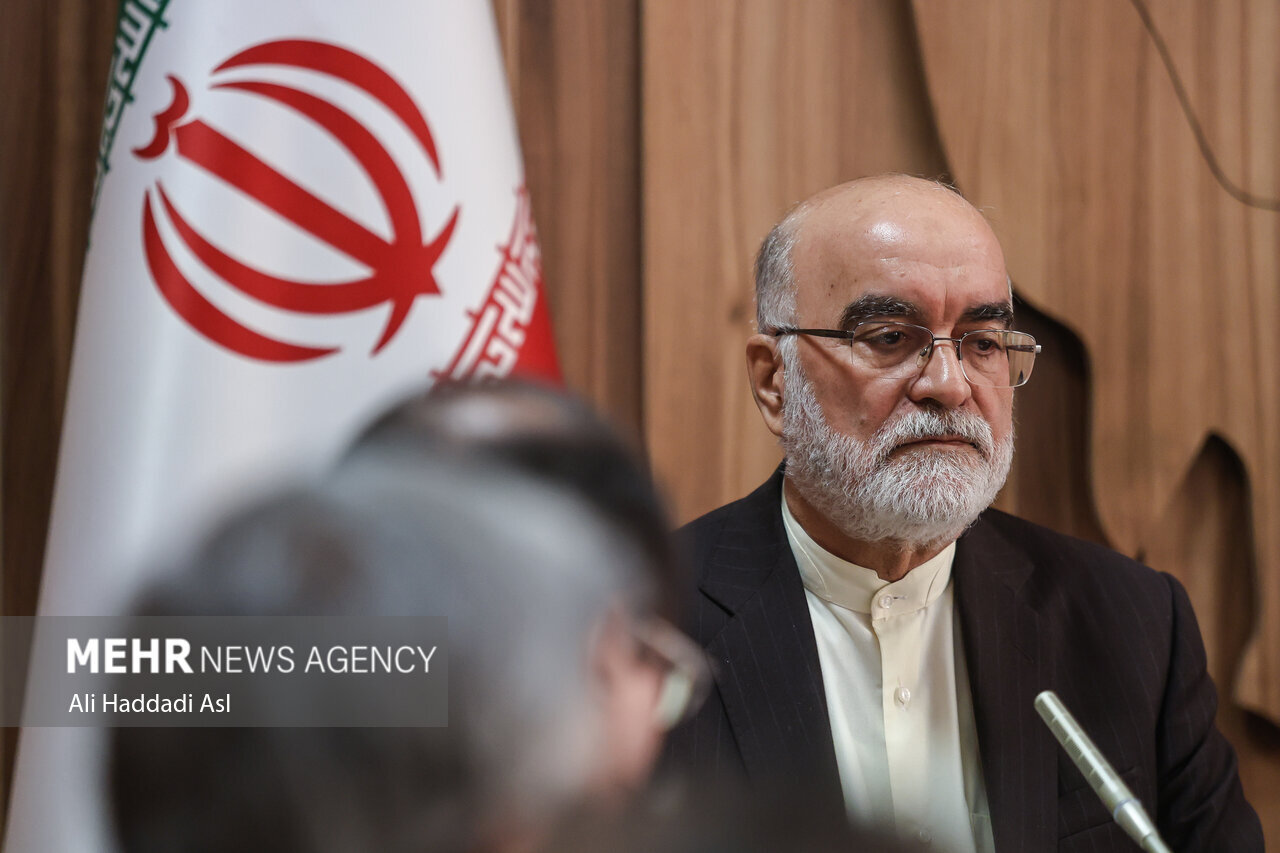
According to Mehr News Agency, quoted by the Deputy Director of International Affairs and Human Rights, Nasser Seraj, Deputy Director of International Affairs of the Judiciary and the Secretary of the Islamic Republic of Iran Human Rights, referring to US unilateralism and weakening international solidarity. Americanization of international law is meaningful, formed as part of American politics and power.
The definition of American human rights
Seraj went on to describe the three important axes of human rights violations by the United States, saying: “Before we look at what the dimensions and dimensions of American human rights, it seems necessary to define the” Americanization of international law “theory.
He added: “Americanization of international law means imposing US patterns, norms and legal procedures on the international law and international organizations, so that its national interests and security are prioritized and the general and binding rules of international law are weakened.”
The secretary of the human rights staff emphasized: “Unilateralism”, “the priority of power over law”, “weakening international solidarity and creating challenge or tension for the international community” are key features of American theory of international law.
He acknowledged: This phenomenon, especially during the presidency of Donald Trump, has reached its peak, and examples such as the purposeful assassination of the rights defender of the martyr Haj Qasim Suleimani in the year, with the exit of international organizations such as the Human Rights Council, the Iranian Republic of Iran, resorting to force and rape. Another illegal is regarded as a manifestation of this process.
Seraj added: In this framework, American human rights, which actually finds meaning in the general policy of Americanization of international law, have been formed as part of American policy and power.
He also said: “In general, American human rights are theoretically and practically a combination of human rights claims and its widespread violations that are both within the US and internationally.” This situation is due to the attitude of exceptionism, racism, and American economic-political interests that have made human rights a tool to dominate and impose American policies.
Victims of human rights violations by the United States
The Secretary -General of Human Rights divided the second axis of human rights violations into two categories, saying that the US's human rights violations can be in two general categories, victims within the US borders and victims outside the borders, which are increasing day by day.
He said: Sometimes it is mistaken that US human rights policies are implemented only to non -US and outside its borders, while existing figures, including many recommendations that the country receives during periodic reports of UPRs, or numerous reports in the United States. And American politicians have not fundamentally believed in human rights and consider it merely a tool for power, and in this respect, there is no difference between their behavior in the domestic and international arena.
Seraj, referring to the documentation of human rights surveillance components in the international arena and international nongovernmental organizations such as Amnesty International and Human Rights Watch, whose appointment to the United States has been repeatedly proven: The main victims of US human rights policies are:
Racial and ethnic minorities: Blacks, Indian natives, Latinists and other minorities are systematically faced with racial discrimination, police violence, and inequality in the judiciary.
Children and Women: Violence against women, gender inequality, and disregard for the victims of sexual violence have been reported many times.
Prisoners and asylum seekers: The United States, with less than 5 % of the world's population, accounts for about 2 percent of the world's total population. Violent treatment of prisoners, torture in prisons such as Guantanamo, and inappropriate treatment of asylum seekers are other examples of US domestic human rights abuses.
Homeless and poor: Social inequality, widespread poverty and homelessness have been proposed as violations of the economic, social and cultural rights of American citizens.
He further referred to the international victims of US human rights policies and said that these victims include a wide range of individuals. However, it may be hard to admit that today, the international community, and in particular international law, is the main victim of the US regime's policies. The United Nations, which was established about five years ago with the aim of protecting human rights and achieving international peace and security, has not been influenced by the US regime's destructive and unilateral policies, and its puppet, the Zionist criminal regime.
The secretary of the human rights staff emphasized: Illegal sanctions, targeted assassinations, force and continuous threats to force and armed aggression against other governments have been repeatedly repeated that some jurists believe this year instead of the 80th anniversary of the United Nations.
He also said: According to the available documentation, the main victims of American inhumane policy outside the country are:
The people of occupied countries: During the Iraq, Afghanistan and Syrian wars, hundreds of thousands of civilians were killed, wounded or displaced. There are reports of rape of Iraqi women and children by US forces and their contractors. Also, the kidnapping and sale of Iraqi children in the Black Market has been reported after the US invasion of Iraq.
The people of the US regime armed countries and the Israeli regime: About 5 people were martyred during the two -day war and the Zionist regime against Iran. Among the martyrs, there were 5 children and adolescents, and 4 were women and three were among the scientific elites. Ryan Qasemian is the youngest martyr who was only 6 months old.
Palestinians: The uncertain US support for the Zionist regime, regardless of whether President Biden or Trump, and complicity in Palestinian human rights abuses, especially in Gaza, are among the most prominent examples of civilians in the hands of US policies. Please pay attention to these statistics:
From October 1 to today, about 6,000 people have been martyred in Gaza, most of which are women and children.
The number of Zionist genocide wounded in Gaza has been recorded to date.
Nearly 6,000 Palestinians are still missing in the Gaza Strip and under the rubble.
The Zionist regime has issued a compulsory order of 6,000 Palestinians in Khan Yonnes.
According to UN Secretary -General Spokesman Stephen Dujarik, about 5 % of the Gaza Strip has either been under forced evacuation orders or is located in the military districts declared by the occupation army.
Sanctions: US unilateral and cruel sanctions against countries such as Iran, Venezuela and Cuba have directly affected the lives of millions of civilians and have led to deprivation of medication, food and basic needs. The casualties of sanctions have been far greater than that of the US regime's war crimes. Following the departure of the US regime from Brajam in year 3 to the present day, only 3 thalassemia patients in Iran have died due to the lack of medicines and equipment needed. The report of the Special Reporter's Special Monitoring Effects of One -Chief of Human Rights from Iran provides significant documentation in this regard.
The missions and approach of the Islamic Republic of Iran's Human Rights Staff to disclose US human rights and pursue the rights of Iranian victims
Seraj went on to point out the third focus of American human rights abuses and human rights missions, saying that the human rights headquarters, as a transcendent policy -making institution, has missions on American human rights. The most important of these missions are:
Identifying human rights abuses in other countries, especially arrogant regimes and declaring appropriate stance against them
Follow up and counter the crimes of terrorist groups internationally and coordinate judicial action to counter terrorism
Human rights monitoring at home and abroad, especially in the face of Islamism and human rights violations in the name of countering terrorism
He stated: The human rights headquarters has put forward the following actions in order to carry out these missions and adopt a demanding and aggressive approach to exposing American human rights and pursuing Iranian victims' rights:
Disclosure of Human Rights by the United States: The Human Rights Staff continues to explore and disclose cases of human rights violations by the US government in domestic and international dimensions. These include violations of minority rights, systematic racial discrimination, violence against women, child rights violations, violent behavior with asylum seekers, and cruel economic sanctions that have had a negative impact on the Iranian people.
Follow -up of Iranian victims: The Human Rights Headquarters, while condemning US human rights measures, including the participation and protection of the crimes of the Israeli regime, reports to international authorities such as the UN High Commissioner for Human Rights and calls for accountability and administration for victims. The headquarters also uses the capacity of NGOs to activate them to file a complaint in the pseudo -judicial complaints of human rights. Therefore, empowering NGOs for complaints is also one of the actions of the headquarters, which is the recent example of which can be seen in the complaint of the Iranian Thalassemia Association on the complaint of a complaint by the Special Reporter's Negative Effects of One -Chief of Human Rights.
Offensive and demanding position: The Islamic Republic of Iran has taken an offensive approach to the West in recent years and has changed its position from the respondent to the questioner and demander. This change is derived from upstream documents such as the Seventh Plan of Promotion of the State and the Document of Transformation and Excellence of the Judiciary. The Human Rights Staff has proposed to create a permanent secretariat for American Human Rights Week to bring together the affected countries in the area and participate in joint demand.
Documentation and Reporting: In addition to disclosing cases of human rights abuses, human rights headquarters and active collections in Iran document legal evidence and analysis and provide international institutions to provide the basis for accountability and administration of justice.
Legal and Legal Copulation: In the context of domestic laws such as the “human rights violations law and American adventure and terrorist acts”, the Islamic Republic of Iran also follows legal and legal measures to counter American human rights abuses.
In the end, Seraj said: “Overall, the Islamic Republic of Iran's human rights headquarters, with an active and offensive approach, discloses the American human rights abuses, pursuing Iranian victims' rights in international and domestic forums and trying to create the voice of these victims by creating media, legal and diplomatic contexts.”
(tagstotranslate) Nasser Seraj (T) Human Rights Staff (T) USA
Source:mehrnews