Iranian researchers uncover likely image of last Sasanian king
3 min read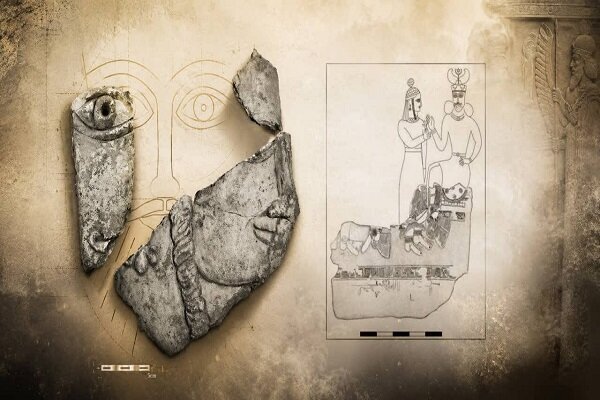
TEHRAN – Researchers from University of Tehran have identified what they believe may be the last known portrait of Yazdegerd III, the final king of the Sasanian Empire, following archaeological excavations at the ancient Bazeh Hur fire temple in northeastern Iran, according to a study published in the Italian academic journal East and West.
The findings emerged from excavations led by Meysam Labbaf-Khaniki, a faculty member in the archaeology department at the University of Tehran, at the Bazeh Hur complex located around 70 km south of Mashhad. The site lies along one of ancient Iran’s principal trade routes linking Khorasan with Sistan, Kerman and the central Iranian plateau.
According to researchers, archaeologists uncovered a late-Sasanian stucco panel portraying four figures, including a seated individual facing three standing figures. Although only the lower portion of the panel survived, the seated figure appears distinct because of elaborate footwear, ceremonial trousers and decorative elements associated with Sasanian royal iconography.
Labbaf-Khaniki said archaeological and historical evidence suggests the enthroned figure may represent Yazdegerd III, who ruled during the Arab conquest of the Sasanian Empire in the seventh century, Mehr reported.
Researchers said excavations also uncovered fragments believed to belong to a Sasanian royal crown. They added that the unfinished nature of the stucco relief and its concealment behind a mud-brick wall indicate the artwork may have been hidden during a period of political turmoil near the collapse of the empire.
The study also draws on historical references, including accounts in the medieval text Futuh al-Buldan, which describe Yazdegerd III seeking refuge in Khorasan during the final years of his reign. Researchers suggested the fire temple may correspond to the ancient Adur Burzen-Mihr sanctuary, one of the most important Zoroastrian religious centers in eastern Iran.
Excavations at Bazeh Hur have been conducted over eight archaeological seasons since 2013 under the supervision of the University of Tehran team. Archaeologists uncovered a large Sasanian-era fire temple richly decorated with stucco ornamentation and wall paintings, reflecting the artistic and religious importance of the complex.
Findings from the site indicate the architectural complex was founded in the late Parthian period and remained active into the early Islamic centuries. Researchers also discovered numerous Middle Persian inscriptions inside the structure, suggesting the sanctuary attracted visitors from different regions over several centuries.
Archaeologists believe a major earthquake between the late ninth and early tenth centuries likely caused the destruction and abandonment of the site.
The study, titled “The Last Image of the Last King: A Sasanian Scene from the Bazeh Hur Fire Temple,” was published in the 65th issue of East and West, a peer-reviewed journal specializing in Asian archaeology and Eastern studies founded in 1950 by Italian scholar Giuseppe Tucci.
According to sources, Bazeh Hur had been studied by architect/archaeologist Ernst Hertzfeld (1879–1948) and art historian/archaeologist Andre Godard (1881–1965) who wrote articles about the monument.
The Sassanid era (224 CE–651) is of very high importance in the history of Iran. Under Sassanids, Persian art and architecture experienced a general renaissance. Architecture often took grandiose proportions, such as palaces at Ctesiphon, Firuzabad, and Sarvestan, which are amongst the highlights of the ensemble.
Crafts such as metalwork and gem engraving grew highly sophisticated, yet scholarship was encouraged by the state. In those years, works from both the East and West were translated into Pahlavi, the language of the Sassanians.
In 2018, UNESCO added an ensemble of Sassanian historical cities in southern Iran — titled “Sassanid Archaeological Landscape of Fars Region”– to its World Heritage list.
AM