From the Gulf of Tonkin to today: The same American playbook
HAFIZABAD, Pakistan – From the Gulf of Tonkin to today, many people believe they have seen the same approach used again and again. The countries are different, the decades are different, and the reasons given are different, but the process often looks familiar: a disputed incident, dramatic headlines, growing political pressure, military action, and then years of conflict that ordinary people are left to live through.
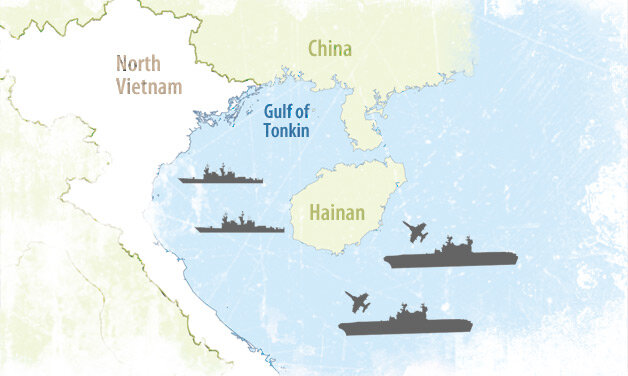
In 1964, events in the Gulf of Tonkin off the coast of Vietnam were presented as a clear attack on American forces. Later, serious questions were raised about what had actually happened. By then, however, the decision to expand the war had already been made. What followed was not a limited operation but a long and costly conflict.
More than 58,000 American soldiers died in Vietnam, while millions of Vietnamese people suffered through years of destruction and loss. Back home, the war divided American society. Images of returning coffins, wounded veterans, and large anti-war protests became symbols of a conflict that many Americans no longer understood or supported.
The Vietnam War ended, but the debate over American intervention did not.
Decades later, the United States entered Afghanistan after the attacks of September 11, 2001. What began as a mission to defeat terrorism turned into a 21-year war. Different presidents tried different strategies. Billions of dollars were spent. Thousands of lives were lost. Yet when American forces finally left, the Taliban returned to power.
For many people, the outcome was a reminder that military strength does not always produce the political results leaders expect.
The Iraq War followed a similar path. The invasion began quickly, but the years that followed brought instability, violence, and consequences that continue to affect the region today.
More recently, Gaza has become another focus of international attention. Years of blockade, military operations, and repeated fighting have shown how difficult it is to resolve deep political conflicts through force alone. Even after heavy destruction, the conflict remains unresolved and continues to shape daily life for millions of people.
Looking at these conflicts together, one point stands out. A powerful military can win battles, remove governments, and destroy targets, but it cannot easily create peace, trust, or long-term stability.
That is why many people are paying close attention to what is happening with Iran.
Iran has spent nearly 47 years living under sanctions, pressure, threats, and confrontation from the United States and its allies. During these years, Iranian leaders, military planners, and strategists have carefully studied American policies, methods, and military campaigns. They have watched Vietnam, Iraq, Afghanistan, Libya, and other conflicts unfold. Supporters of Iran’s position argue that this long experience has given the country a deep understanding of how Washington applies pressure and how states respond to it. Whether one agrees or disagrees with that view, it is difficult to deny that Iran has spent decades preparing for the possibility of confrontation.
Iran is not simply another country in a political dispute. It is one of the world’s oldest civilizations, with a long history, a strong national identity, and a population that has lived through war, sanctions, and foreign pressure for decades.
Today, many critics argue that the United States is once again using an old playbook to build support for confrontation with Iran. They believe disputed claims, media campaigns, and political pressure are being used to justify another conflict. Others disagree with that view, but the debate itself shows how much public trust has changed since the Vietnam era.
History offers a warning. Military power alone does not guarantee success. The United States entered Vietnam with overwhelming strength but failed to achieve its goals. Afghanistan became America’s longest war and ended without a clear victory. Iraq showed how quickly a military campaign can lead to years of uncertainty.
Iran is not Vietnam, Afghanistan, or Iraq. It has its own history, its own strengths, and its own place in the region. Any leader who assumes the same strategy will produce the same result may be ignoring important lessons from the past.
The world has also changed. In the age of smartphones and social media, governments no longer control information the way they once did. People can question official claims, compare different sources, and follow events in real time.
Perhaps the most important lesson is that ordinary people usually pay the highest price for war. Whether they live in America, Iran, or anywhere else in the region, they are the ones who face the human cost when conflicts grow beyond control.
From the Gulf of Tonkin to today, many people believe the same playbook is still being used. The difference is that the world has changed.
Iran is not a chapter waiting to be written by foreign powers. It is a civilization that has endured for thousands of years, survived empires, invasions, and immense pressure, yet remained standing.
Any leader who ignores that reality risks becoming another cautionary tale in the pages of history. The American old playbook no longer fits the architecture of the modern era.