Middle East power balance shifting after Iran war, says John Helmer
18 min read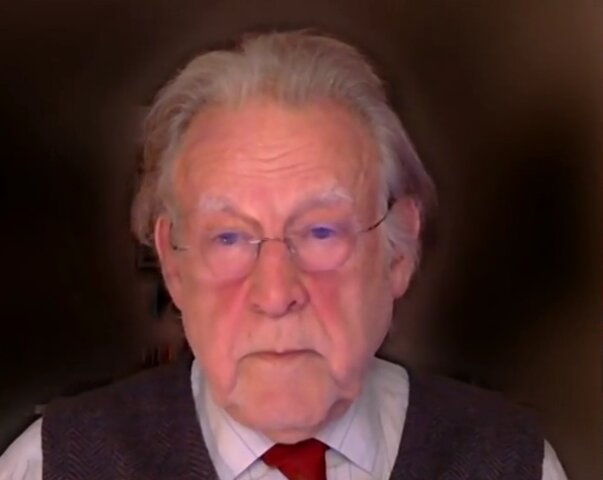
TEHRAN- As tensions between Iran and the United States continue to fluctuate between military signaling, sanctions pressure, and intermittent diplomatic messaging, questions remain over Washington’s strategy and the evolving balance of power in the Middle East. Following the 40-day war, analysts are debating whether recent developments reflect a structural shift or a temporary phase of managed escalation.
In this context, Tehran Times spoke with John Helmer, a veteran journalist and geopolitical analyst based in Moscow, to assess the implications of the conflict for U.S. policy toward Iran, the role of domestic political calculations in Washington, and shifting regional alignments. Helmer is the editor of Dances With Bears (https://johnhelmer.net/) and has covered Russian and international affairs for over three decades.
In this interview, Helmer examines coercive diplomacy, regional security dynamics, and the limits of U.S. strategy.
Below is the full text of the interview:
After the 40-day war, to what extent did events validate the view that Trump could not sustain a full-scale confrontation with Iran? What, in your assessment, did Washington and Tel Aviv misunderstand about Iran’s capabilities and response?
Trump is currently escalating on two fronts simultaneously: through military pressure and through sanctions. U.S. Treasury Secretary Scott Bessent has continued tightening financial, trade and maritime sanctions even as Washington is engaged in negotiations for de-escalation through the proposed memorandum of understanding and an extended ceasefire framework. In other words, escalation and armistice diplomacy are running in parallel.
In my view, this reflects White House political performance aimed at the domestic voter and election financier audience, because Trump is already operating in campaign mode. With the summer driving season underway in the United States and Europe, rising fuel prices are directly affecting voters’ daily lives.
Trump faces a difficult political balance. He must maintain support within his Republican base, preserve alignment with Israel, and avoid triggering further inflation or economic anxiety that is shifting undecided and independent voters against him. This makes his overall behavior relatively predictable in strategic terms, even if it looks inconsistent from day to day.
More broadly, Trump is still convinced that military force can deliver political outcomes. In the case of Iran, that assumption has not held. Iranian resistance—supported by forces in Lebanon, Ansarallah in Yemen, and elements of the Iraqi resistance—has surprised Washington and its allies.
What was expected and planned was a short conflict involving rapid decapitation strikes, followed by internal chaos that could be leveraged politically. That scenario did not materialize.
Military failure carries a significant political cost for any U.S. president. Trump often describes opponents as “losers,” but he cannot afford to be seen in those terms himself. Because a strategic miscalculation has occurred, he now faces the challenge of managing its political consequences.
As for Israel, I am less certain in my assessment. I follow developments from Moscow and do not see evidence that the Netanyahu government—or the broader pro-Israel establishment—believes it has made a strategic error. On the contrary, Israeli leadership continues to project confidence and pursue escalation rather than reassessment.
There may be internal disagreements, but they are not yet reflected at the government level. Ultimately, the key political test remains electoral continuity, as Netanyahu remains in power.
At this stage, neither Trump nor Netanyahu will publicly acknowledge mistakes or find scapegoats for their battlefield defeats.
Some analysts argue that Netanyahu and the pro-Israel lobby played a decisive role in drawing Trump into the February 28 attack. After everything that unfolded during the following 40 days, do you think Trump’s post-war approach still prioritizes Israeli interests over American ones?
I don’t agree with those American and European analysts and podcast commentators who believe the Israeli dog wags the American tail.
To understand the present, we need to go back. Once the United States emerged from World War II— even as it was still concluding the war against Germany in the early 1940s—its strategy toward the Arab world and Iran was built on several core priorities.
The first was to push out the British and French colonial presence, and in replacing the old imperial powers, to secure US control over oil resources. This meant gaining Middle East oil concessions, pipelines, ports, and transport routes to make sure that energy would flow from the region to American markets and beyond – at the price the US dictated. These concessions were contested by the British in Egypt, Saudi Arabia, Iraq, and Iran; the French in Morocco, Algeria, and Tunisia.
The second major pillar of U.S. strategy, which is often overlooked today, was the determination to confront and ultimately weaken the Soviet Union; that was Enemy No. 1. This began with war planning against Stalin, including the new atomic weapons, and evolved into a broader Cold War strategy in which the Middle East played a lynchpin role. The region was envisioned as a strategic rear base for nuclear attack operations against Soviet targets.
In this context, the Arab governments, Iran, and the nationalist and communist movements of the Middle East were to be contained or neutralized. This involved a wide range of methods: political pressure, covert operations, bribery, assassinations, and divide-and-rule tactics with the tribes, clans, religious communities. The CIA was emerging from the war period as a powerful instrument of such covert activity with the ambition to expand its global reach. On this history, my late wife, Claudia Wright, and I co-authored a book titled The Jackals’ Wedding: American Power, Arab Revolt . The title comes from an Iraqi Arab expression referring to alliances which last very briefly before the partners turn against each other. That’s the dynamic which the Americans, like the British and French, and the Turks before them, all exploited. The book traces the evolution of these empires from the 1940s through to the Libyan revolution under Muammar Gaddafi, examining how regional alliances were shaped, broken, and reshaped under external pressure.
This is not a new story in the case of Iran, as the overthrow of the Mossadegh government in 1953 clearly demonstrates and you remember. A similar pattern has unfolded across the Arab world. From the 1940s onward – so almost a century now — U.S. strategy has consistently prioritized anti-communism and anti-nationalism to prevent the Arabs and Iranians from acquiring political and military independence plus control over their own oil resources.
The Zionist movement and the Jewish communities emerged to create the Israeli state within this broader framework of empire, not as its primary driver. Their early activism began during the Roosevelt and Truman administrations, when Jewish advisers close to the president played a role in shaping policy debates to favour Israel over the oil company and military preference for the Arabs. In some cases, this process could be described as state capture, where ideological alignment between U.S. strategic interests and Zionist objectives was actively constructed and propagandized.
However, I don’t see that the evidence supports the conclusion that Israeli interests determine U.S. policy. Whatever the positive and negative relationships between American presidents and Israeli leaders—or between figures such as Trump and Netanyahu—the dominant factor remains American strategic priorities.
Today, what we are witnessing is a more complex configuration. Israeli and Jewish expansionism has taken on a more ideological and religious character, influenced in part by currents that predate modern Zionism, including movements such as Chabad, which is a clerical or theological expression of Jewish supremacy. Figures of the moment like Jared Kushner have been associated with this network of influence in close proximity to Donald Trump.
At the same time, the expansion of Israeli influence, the weakening of the Arab nationalist states, and the fragmentation of countries such as Syria, Iraq and Libya have led some observers to conclude that Israel is the leading actor and the United States the follower. I would argue that this interpretation reverses the reality of the interests at stake. The U.S. remains the dominant power, though at times Israeli influence is more visible and assertive.
There is also a growing role of evangelical Christian support in shaping U.S. policy toward Israel with strong hostility toward Iran and Arabs. These ideological currents help pay for US election results; they reinforce existing strategic interests, but do not replace them.
Not yet.
So the key question today is what happens when U.S. and Israeli objectives run into serious resistance—particularly from Iran—without achieving their strategic goals and at a rising cost domestically. Iran’s ability to respond and inflict damage in return for the war inflicted on it for fifty years – in parallel with the relative weakening of the Arab states and Palestinian movements — has altered regional calculations in a way that has not been seen before; the damage to Israel’s military, economic and psychological security is obvious; genocide as their method and morality understood as never before.
This also raises important questions in the context of U.S. domestic politics and elections which require constant calculation of how to maintain power, manage alliances, win elections – and raise the money required.
For example, within the current Republican Party landscape, both Vice President J.D. Vance and Secretary of State Marco Rubio are potential successors to the Trump presidency. Both are Roman Catholic and have expressed discomfort with some of the controversial positions and rhetoric associated with Donald Trump, including his treatment of Christian religious symbols and institutions like the Pope.
However, I do not believe Trump is likely to choose either of them as his successor. Instead, for the future safety of the fortune he is accumulating now, he will calculate that one of his sons, such as Donald Trump Jr. or Eric Trump, should become his political heir, and that that he can rely on the personal loyalty and name recognition to influence the Republican base to back this succession choice in two years’ time, for the 2028 presidential election.
Such a development, and the suspicion of Trump’s dynastic ambition among competing Republicans, will reshape internal party dynamics and affect how U.S. warmaking with Israel in the Middle East is framed in the electoral contests of the next two years. In this context, some Republican figures seeking political distance from Trump’s current positions may attempt to shift blame for the US economic pain onto Israel.
So, for the first time, there is a possibility of a broad political backlash against Israel. However, the outcome is highly uncertain because the Democratic Party opposition to Trump continues to maintain strong support for Israel.
Ultimately, while tactical adjustments may occur in response to electoral pressures, the structural alignment of U.S. policy in the region remains largely unchallenged, unchanging.
In your view, has the Islamic Republic’s resilience and response to U.S. and Israeli attacks—including its retaliatory strikes on U.S. bases in Gulf countries—altered the balance of power in the Middle East? Or has this conflict primarily exposed existing vulnerabilities across all parties involved?
The balance of power in the Middle East has changed. Let’s take it step by step.
In the last generation, the Arab Gulf states—the House of Saud, the Nahyan and Maktoum families in the UAE, the Al Sabah in Kuwait, and the Al Khalifa in Bahrain—have never been as externally vulnerable as they are now. Iraq under Saddam Hussein once threatened along all its borders but his threat was short-lived and he failed decisively—in his wars against Iran, Kuwait, and finally against the United States.
However, today even the US air defences and military bases which the Gulf states once believed were invulnerable and guaranteed their protection have proven to be vulnerable. Their broader economic and geopolitical strategies—the investment and logistic corridors linking India through the Arabian Peninsula to Europe—are also under pressure, effectively exposed to Iranian and Yemeni military reach.
As a result, the Gulf Arabs are not only competing with one another, but they are also increasingly forced to seek new security arrangements. The perceived failure of the United States and Israel to provide full protection has pushed leaders such as the UAE’s Mohamed bin Zayed toward new security understandings with India, potentially involving expanded Indian security cooperation. At the same time, Saudi Arabia has strengthened its ties with Pakistan for similar security assurances and force deployments. While such arrangements are not new in regional history, they reflect a renewed dependence on external military support.
That in turn is already threatening the prosperity-in-pace models on which the sheikhdoms have been counting for the future.
So yes, the balance of power has shifted, and this is one of the key strategic outcomes. From an Iranian perspective—and for the broader axis of resistance—this represents a significant development, although how. together, they may capitalize on it is another matter.
Second, there is also a clear erosion of American and Israeli credibility. Their influence has long rested on the perception that they can offer impregnable protection to regional allies and impose costs on those who resist or challenge. For the first time, however, that credibility has been weakened by their inability to guarantee the security of Gulf states from Iranian and their allied capabilities.
That said, Israel does not yet interpret the situation in this way. Israeli strategy remains focused on expansionist goals, with assumptions of dominance in Syria and Lebanon. But if Hezbollah’s anticipated strategy north of the Litani River unfolds as planned and produces the kind of operational surprise seen in previous conflicts, then Israel’s ability to project military and economic power into Lebanon and Syria will be further constrained.
In that sense, the shift in the balance of power is already underway—the fight is on, the outcome uncertain, the consequences still unfolding.
If another round of conflict occurs, how do you assess the likely response of Persian Gulf states? Would they continue to rely primarily on the United States and align with Western positions, deepen ties with Russia and China, or move further toward more autonomous regional arrangements with Iran?
That’s a big question, because Russia and China have not proven to be all that they claim they are—at least from the perspective of Iran.
The value of Russian and Chinese financial support, military technology, intelligence sharing, sanctions busting, and diplomatic backing has so far not translated into a decisive security benefit compared to the US and Israel combination. We don’t need to go deeply into how effective the Sino-Russian combination has been for Iran specifically, except to say that so far its impact appears modest.
From my sources—mostly Russian, but also some remaining Arab contacts—I understand that Iran has increasingly reached a conclusion similar to others in the region: that it is on its own. It must therefore develop self-sufficient capacities for warfare and economic resilience.
This does not mean Iran is isolated. It maintains useful partnerships and workarounds—such as the overland rail and road routes through Turkmenistan and shipping access via the Caspian Sea—that help to mitigate US and allied pressure. But the practical imperative remains: Iran must ensure its own survival under conditions of blockade, relying on partners who are not formal allies and who have their own wars to fight.
A similar logic appears to be shaping the thinking of Gulf Arabs. The behavior of the Emirati and Saudi leaders suggests they also increasingly see themselves as on their own. As a result, they are attempting to build alternative regional alignments.
Pakistan in this framework is not really a strategic ally but more a subordinate security provider—offering manpower and limited military support in exchange for economic assistance. India, by contrast, is a far more significant potential partner, a global power in the making, with whom long-term strategic relations might help stabilize ruling regimes in the Gulf.
However, India itself – through the actions of Prime Minister Modi and Foreign Minister Jaishankar — has made serious strategic miscalculations, particularly in aligning with the United States and Israel in the war against Iran which began on February 28. As a result, India is now paying a severe diplomatic, geopolitical and economic price. Modi’s future, along with Jaishankar’s, are under domestic challenge. India’s reliability as a stable external pillar for Gulf security is not what it appeared to be before February 28.
So looking forward, it is difficult to see the Gulf states relying on either Pakistan or India to offset the strategic losses they have experienced due to their overconfidence in the U.S. and Israel. Instead, they are likely to continue balancing between multiple powers—without any of them fully replacing the old security architecture.
Do you see Trump’s proposed new agreement with Iran as a durable long-term deal, or more of a tactical pause—possibly aimed at easing tensions and stabilizing oil markets ahead of major global events like the World Cup?
Let’s start with the so-called memorandum of understanding and look at its reported terms.
One version of the document has been circulated through what Axios has reported in Washington. Axios presents itself as an American media outlet, but it reflects Israeli channels that provide selective leaks. It is not reporting neutrally; it is propaganda.
According to that version, the agreement is described as a negotiation in phases. The idea is that negotiations would be staged rather than comprehensive from the outset. From an Iranian perspective, this in itself is a tactical advantage, because Tehran has consistently argued that it will not negotiate all issues simultaneously with a party it considers unreliable, and so confidence must be built step by step.
The first step or stage reportedly includes a temporary commitment that there would be no new military attacks during the truce period. However, from the Iranian point of view, confidence in this clause is already questionable given previous episodes of attacks during periods of negotiation and de-escalation.
A second element concerns the reopening of maritime routes for normal global shipping. In principle, this is something Iran could accept, but it would depend on clear preconditions, particularly regarding the broader security environment in the region and the withdrawal of the US fleet.
A third point involves Iran removing naval mines and contributing to restoring safe maritime navigation. This, too, is technically negotiable, but only if there is reciprocal action, including clarity on the reduction of US military pressure in the same maritime space. Otherwise, the obligations would be asymmetric.
Another central issue is the nuclear file, including the status of enriched uranium stockpiles, future enrichment limits, and the structure of Iran’s civilian nuclear program. Under the reported framework, these issues would be deferred to a later stage of negotiations, conditional on sufficient confidence-building during an initial 60-day period.
From the Iranian side, there is also the question of financial guarantees. One reported proposal suggests the release of frozen Iranian assets, potentially in the range of 12 to over 20 billion dollars, depending on how they are calculated. In Tehran’s view, these are assets that were unlawfully seized in different jurisdictions.
From this perspective, Iran’s position links economic guarantees with maritime arrangements. The logic is that opening strategic waterways such as the Strait would only be sustainable if financial commitments are placed on the table first. Otherwise, Iran would be expected to make concessions without reciprocity. Continuing sanctions against Iran would keep the Hormuz closed for Iran, open for everyone else.
Opening the Strait should in principle benefit both sides, enabling the flow of oil exports and commercial shipping. But in Iran’s view, this must be part of a balanced exchange rather than a unilateral concession.
I also think that much of the current negotiation framework is shaped by domestic election calculations in Washington. President Trump, in particular, is operating in a highly polarized political environment where he must avoid being perceived as weak or as having “lost” a strategic confrontation. That domestic pressure significantly shapes the structure and timing of any agreement.
Limited military actions in the maritime domain in recent days have more political than military significance. They are primarily designed for American voters, and to demonstrate toughness rather than to achieve decisive strategic outcomes against Iran.
From Iran’s perspective, the Strait remains a key strategic lever. It is not something Tehran can abandon without substantial reciprocal concessions. At the same time, there is room for phased arrangements, including toll mechanisms or revenue-sharing models similar to other international waterways, on condition that broader sanctions relief and asset releases are implemented.
There is therefore theoretical space for negotiation if both sides engage in good faith. However, domestic political constraints in Washington, as well as regional calculations involving Israel and other actors, continue to show inconsistency, deception, bad faith.
For now, I see the situation as open in principle but politically constrained in practice, plus unresolved conflict and fighting in Gaza, the West Bank, Lebanon, and other regional flashpoints that influence the negotiating environment.
Do you think another attack could still occur during ongoing negotiations—similar to previous conflicts in June 2025 and February 2026—or are the parties more likely to pause, assess developments in the U.S. and Israel, and delay any further escalation?
Yes. With adversaries like Israel and the United States, and given their track record and what they keep repeating as their war aims, Iran must always expect the possibility of an attack and be prepared for it.
At the same time, such preparedness also requires addressing internal challenges, particularly the economic pressures on the Iranian people which have been exacerbated during this confrontation. These domestic issues must be managed and stabilized as quickly as possible through government policy and confidence building. That’s easier said than done.
President Trump, for example, recently claimed during a cabinet meeting that Iran’s economy is under severe strain. I am quoting him here: he suggested that Iran is “clobbered,” that its economy is in turmoil, and that inflation is extremely high, with the value of its currency significantly weakened. He argued that Iran had miscalculated by expecting time to work in its favor, while he claimed to be unconcerned himself about the electoral pressures he is facing, such as the midterm Congressional elections.
In his view, the combination of economic pressure, sanctions, and military force will compel Iran to reach an agreement on Trump’s terms. This reflects a broader strategy of maximum pressure, which he has previously applied to other countries such as Venezuela and Cuba, and which he believes can be used to force concessions from Iran now. Incidentally, Trump and his advisers share the conviction of the European and British leaders that this strategy is also working against Russia in the Ukraine war.
So the key question for Iran is how much it can, in the short term, deter the resumption of a large-scale war while at the same time managing the trade-offs involved in maintaining the necessary level of readiness to defend and repel if the war resumes.
In other words, Iran is being forced to balance military preparedness with economic survival. Any improvement in the domestic economic situation comes at a cost, because the U.S. strategy—at least as articulated by Trump—is based on the idea of squeezing Iran from within and without. Iran therefore has to respond not only to external military pressure but also to sustained economic pressure. It must find ways to counter both types of attack as effectively as it has developed its missile and drone capabilities against external threats.
This creates an unusually difficult strategic problem. Fighting a conflict of this nature while simultaneously protecting the economy under sanctions is a major challenge. It is not often discussed in public commentary or even in many policy discussions, yet it is arguably as difficult—if not more difficult—than the purely military dimension, such as concealing and protecting advanced missile and drone systems.
From this perspective, while military preparedness is essential, the prevailing assumption in Washington is that maintaining pressure on Iran’s economy will eventually force it to accept the US terms amounting to unilateral disarmament. The Iranian challenge, therefore, is to develop an effective counterstrategy to this economic pressure while sustaining its military deterrence posture.
Plainly, this comes at a high domestic cost. It is an emergency for the Iranian population.
With the ceasefire fragile and Hormuz tensions high, what are the most dangerous flashpoints—and what realistic off-ramps exist?
Rather than speaking of ‘flashpoints,’ I would frame the issue in terms of ‘flash people’—that is, those key U.S. officials who are capable of escalating violence, obstructing agreements, and undermining negotiations. In this sense, what you might call the ‘genocide 10’ operate within a system that is structurally and ideologically oriented toward war.
Figures such as the CENTCOM leadership, the Joint Chiefs of Staff in Washington, the Secretary of War, and intelligence officials like the CIA Director are embedded in institutional frameworks where effectiveness must be constantly demonstrated through military plans and operations. Their budgets, their inter-agency influence, their career ambitions and their future fortunes are all tied to operational engagement and escalation.
From the broader strategic perspective—whether Iranian, Arab, Russian and Chinese —the challenge for now is identifying which elements within the U.S. system can be motivated or compelled to restrain escalation. The vulnerability of the Trump succession is becoming more obvious. Figures such as J.D. Vance or Marco Rubio, for example, may represent potential counterweights to Trump and the Jewish lobby within the system of American war everywhere at once.
https://www.amazon.com/Jackals-Wedding-American-Power-Revolt/dp/B09T5TQF97/ref=sr_1_1?crid=25H8OJRLLHT7T&keywords=John+Helmer,+The+Jackals%27+Wedding&qid=1645696376&s=books&sprefix=john+helmer,+the+jackals%27+wedding,stripbooks,271&sr=1-1