How China’s Development Model Reshaped Global Trade?
3 min read
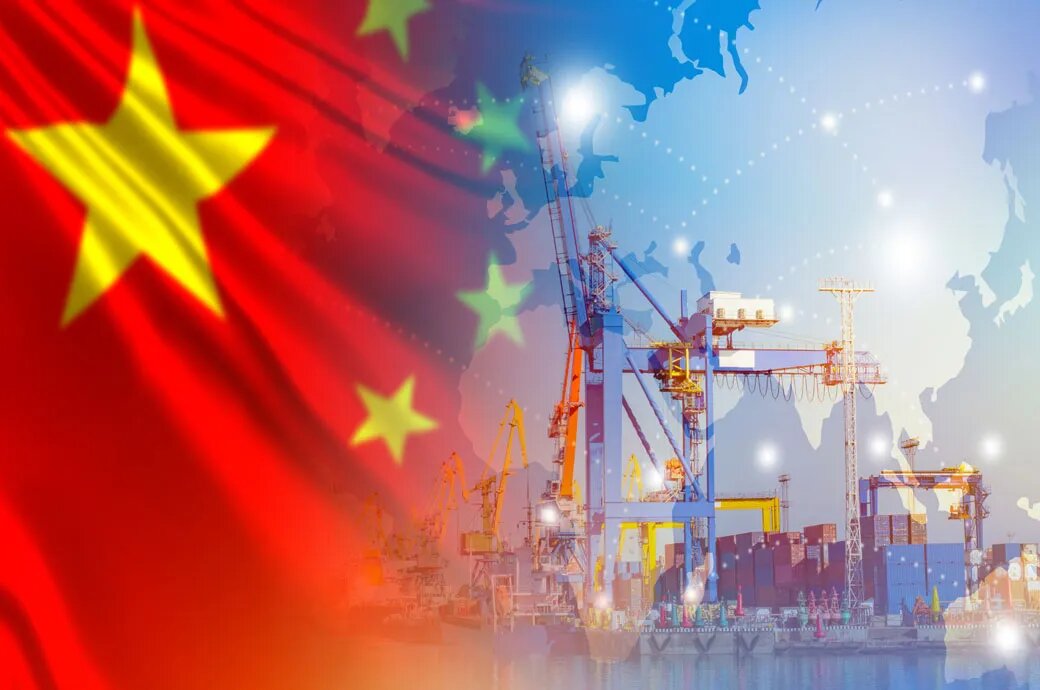
In today’s world, economic competition is no longer defined solely by cheaper production or higher export volumes. A major part of this competition now depends on a country’s ability to build extensive, efficient, and globally connected infrastructure networks. Over the past two decades, China has demonstrated that infrastructure development is not merely a construction agenda; it is a strategic instrument for expanding economic influence, facilitating trade, and redefining a nation’s position in the global economy.
China’s infrastructure development model has rested on several key pillars: large-scale state investment, long-term planning, strong links between production and transportation, and the use of infrastructure as a driver of economic growth. By massively expanding ports, railways, highways, industrial zones, power generation, and logistics networks, China succeeded in reducing the cost of moving goods, improving access to markets, and strengthening the competitive advantage of its manufacturers.
One of the most important features of this model is its integrated view of the supply chain, from production to export. In China, factories, ports, rail systems, warehouses, energy infrastructure, and markets have not been developed as isolated sectors. Instead, they have functioned as parts of an interconnected economic system. This structural integration has helped turn China into one of the central hubs of the global supply chain. When infrastructure is designed effectively, trade is not only facilitated; it becomes faster, more reliable, and more cost-efficient.
The expansion of large and advanced ports has been one of China’s most powerful tools in shaping global trade. Today, Chinese ports rank among the busiest and most technologically advanced in the world, playing a critical role in the movement of goods between East and West. At the same time, the development of rail networks and multimodal transport systems has enabled China to strengthen its presence not only in maritime trade, but also along major land corridors. This has become particularly significant in connection with Asian, European, and Eurasian markets.
The impact of this model on global trade extends far beyond China’s borders. First, many countries, especially in Asia, Africa, and parts of Europe, have drawn lessons from China’s experience and increasingly recognize infrastructure as a prerequisite for export growth and investment attraction. Second, global supply chains have become more dependent than ever on the quality and capacity of national infrastructure systems. In a world where speed, transport cost, and reliability of delivery are decisive, the most successful economies are those that treat infrastructure not as an expense, but as a strategic investment.
At the same time, China’s experience offers a clear lesson for developing economies: industrial development cannot be sustainable without competitive infrastructure. Production only becomes real economic power when it can connect to domestic and international markets in a timely, efficient, and dependable manner. In this sense, China’s infrastructure development model shows that global trade today rests more than ever on the foundations of ports, railways, roads, energy, and logistics.
Ultimately, by investing heavily in infrastructure, China did more than expand its production capacity; it also influenced the rules and patterns of participation in global trade. This experience suggests that countries which place infrastructure at the center of their development strategy are far more likely to secure a stronger and more lasting role in the world economy.